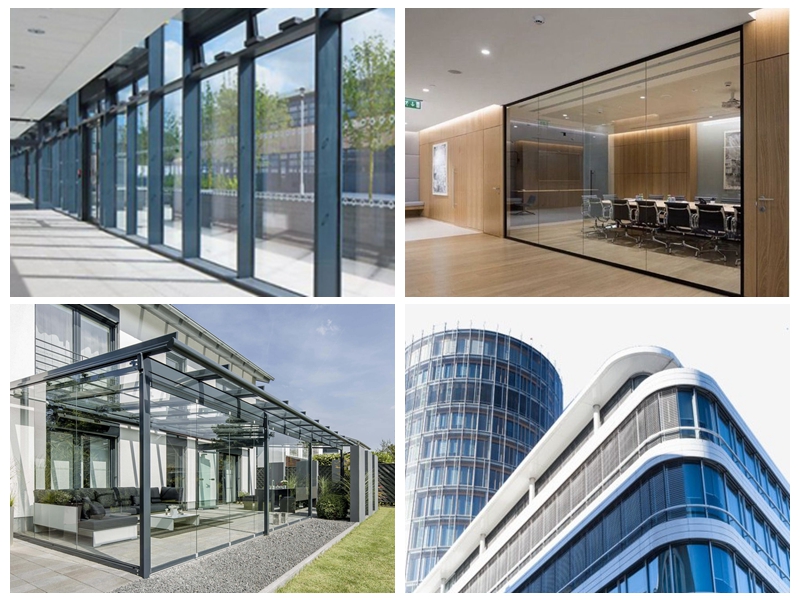


Laminated insulated sealed double paned glazing glass unit
Composition: laminated glass+spacer+tempered glass/laminated glass
Single glass thick: usually is 4-12mm
Spacer: 6mm, 9mm, 12mm, 15mm etc.
Color: custom color
Size: custom size
Application: window, partition wall, roof, facade etc.
Sample: avaiable
Specifications
| Product | laminated insulated glass |
| Composition | laminated glass+spacer+tempered glass/laminated glass |
| Single glass thick | usually is 4-12mm |
| Spacer | 6mm, 9mm, 12mm, 15mm etc. |
| Color | custom color |
| Size | custom size |
| Application | window, partition wall, roof, facade etc. |
| Sample | avaiable |
Laminated Insulated Glass
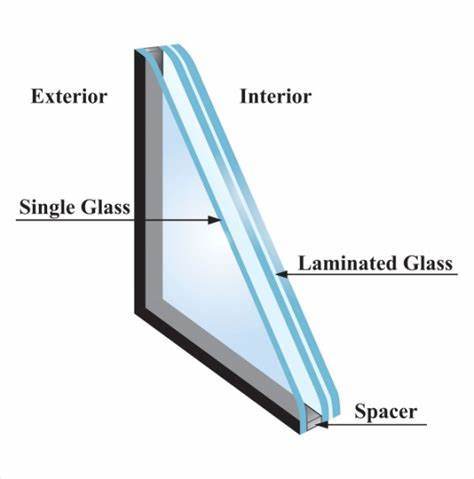 | Laminated insulated glass consists of one pane of laminated glass and one panel of tempered glass separated by a space. The perimeter of the glass is sealed, allowing no movement of outside air into the space. The space itself can be filled with dehydrated air, or with a special gas. The type of glass, the type of spacer, and the type of gas used in the space contribute to the overall insulating efficiency of the glass, and also the total cost. |
Characteristics of Insulated Glass
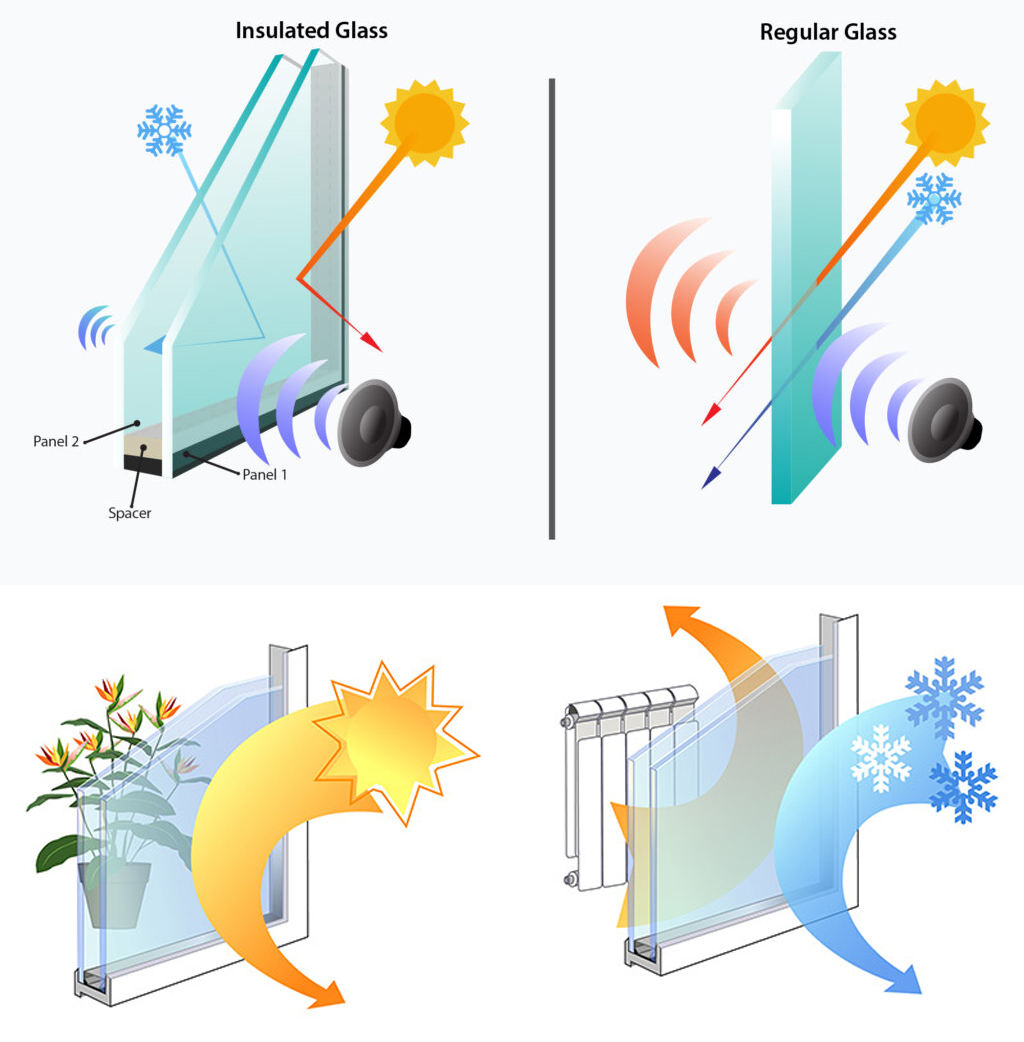
Double glazing glass has better thermal insulation properties due to the presence of a gas-filled cavity between the panes of glass.
During the summer season, IGU helps keep the indoor cool by blocking the entrance of heat energy.
In the winter season, IGU restricts the outflow of indoor heat and helps develop a cozy and comfortable indoor environment.
Insulated glass has high sound insulation properties and is best for crowded areas where the need for seclusion is the most.
The surface of the insulating glass unit prevents excessive condensation which results in the fogging of glass.
They have enhanced strength and can withstand the wind and snow loads.
Available Types of Insulated Glass
1. Argon-Filled Insulated Glass
Argon gas is widely used in insulating glass units to fill up the cavity between the layers or panes of glass. An inexpensive, colorless, odorless, and non-toxic argon gas greatly contributes to the enhancement of the performance of insulated glass. Noble gases like argon are usually preferred over the air as the presence of air in the cavity often fogs up the glass due to the high percentage of moisture. Air does also has lesser insulating properties than the noble gas counterparts. Argon-filled insulated glass significantly improves U-Value and soundproofing. They also help in minimization of heat transfer and can be used in congestion with Low-E coatings. Besides this, argon gas doesn’t corrode the window frames and also does not contaminate the environment with toxicity.
2. Low-E Insulating Glass Unit
Low-E coating glass is also known as low-emissivity glass are designed to reduce the U-Factor and regulate heat transfer. Emissivity coating is accomplished by the application of microscopically thin layers of metal oxides which also gives the glass surface a greenish tint. The additional coating of metal minimizes the heat transfer and makes it a more effective insulating unit. The combination of both Low-E coating and space or gas-filled cavity results in the augmentation of thermal insulation. These coatings can reduce energy loss by up to 50% and promotes the idea of energy conservation. Special Low-E coatings are designed to allow passage of certain types of light to illuminate the interior space.
3. Dual-Seal Silicon Insulated Glass Unit
Dual seal-silicone insulated glass units are modernized double glazing glass which stands apart in terms of longevity and durability. The silicone seal or commonly known as PIB forms the most effective barricade against the atmospheric moisture and helps maintain the insulation properties of the glass. Silicone sealant bonds are incredibly resilient which makes them durable and adequate for commercial and industrial glass use. Insulated glass can be fabricated as PIB or silicone seal insulated glass due to its incredible design versatility and flexibility. Their lower moisture penetration rate helps maintain its insulation property without compromising on the translucency of the glass. Lower moisture means fewer changes of glass fogging up and becoming cloudy.