

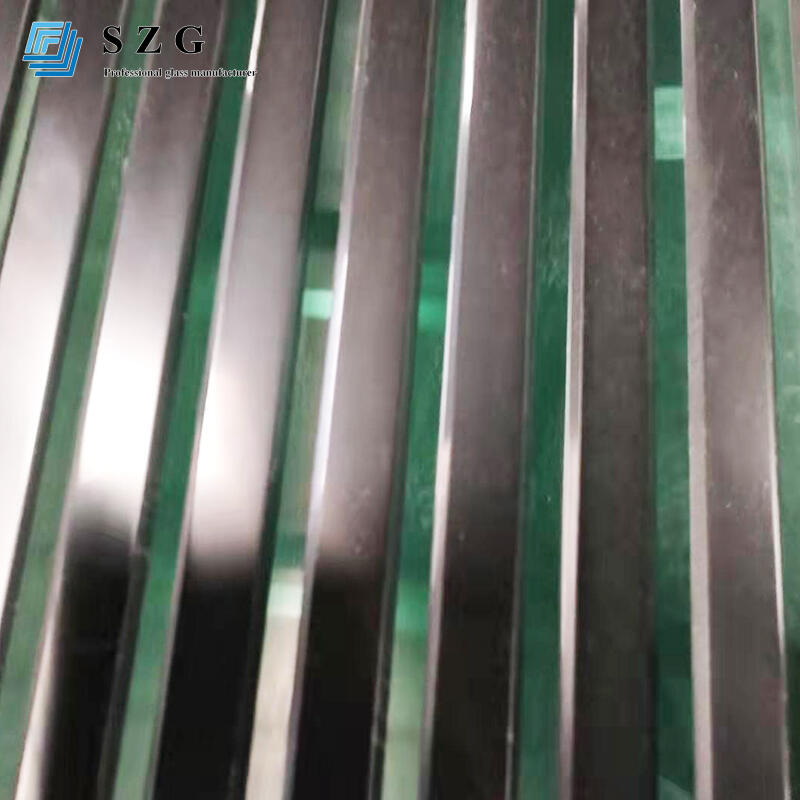
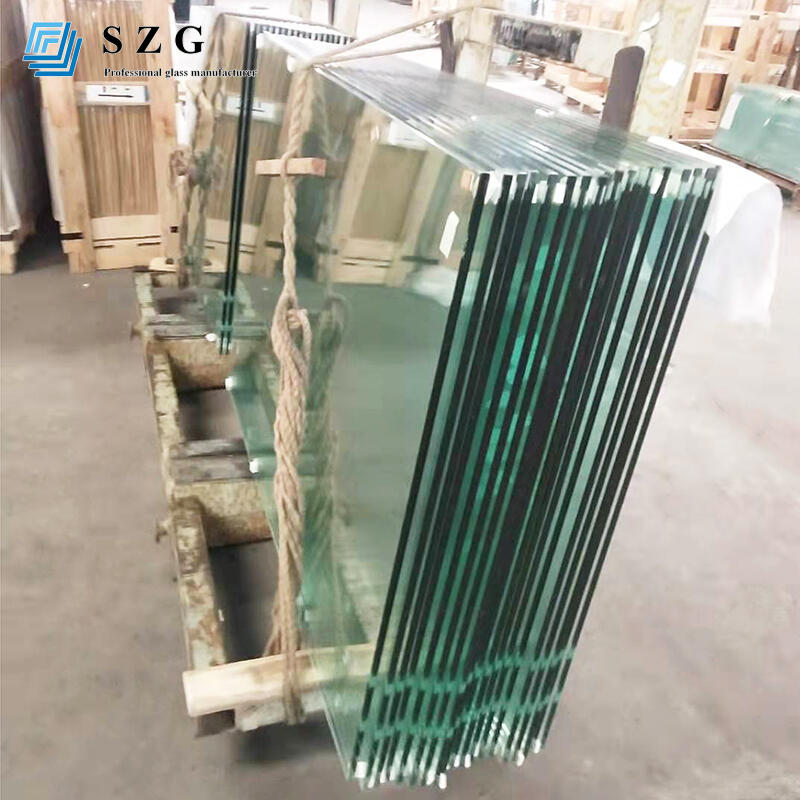
12mm thick clear tempered toughened tuffen glass
Thickness: 12mm
Color: clear
Size: customer's demand size
Processing: edges polishing, holes drilling, notches cutting, safety corners, logo printing etc.
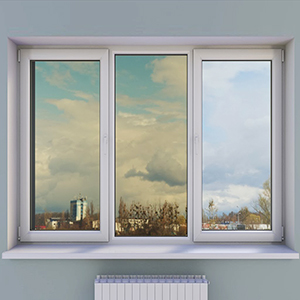
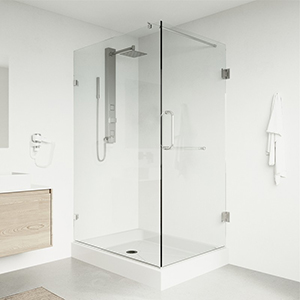
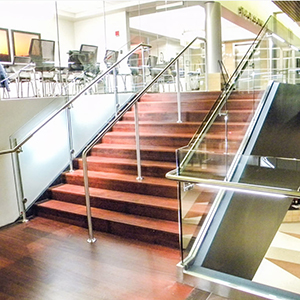
Application: window, door, railing, partition wall, shower room, canopy etc.
Sample: avaiable
Specifications
| Product | tempered glass, toughened glass, tuffen glass |
| Thickness | 12mm |
| Color | clear |
| Size | customer's demand size |
| Processing | edges polishing, holes drilling, notches cutting, safety corners, logo printing etc. |
| Application | window, door, railing, partition wall, shower room, canopy etc. |
| Sample | avaiable |
12mm Tempered Glass
The production of toughened glass is to quench the glass with high-speed air and other cooling media when the glass is heated uniformly to the softening temperature.The uniform compressive stress on the glass surface can improve the mechanical strength and thermal shock resistance of the glass.Using air as the cooling medium is said to be toughened.The flexural strength of toughened glass is 3 ~ 5 times greater than that of untreated glass, up to 150 ~ 250 mpa, thermal stability is improved 3 ~ 4 times, can withstand the temperature difference of 200 ~ 250℃ sharp change, no sharp edges and corners of the particles formed when broken, very little harm to human body, is the most widely used safety glass.
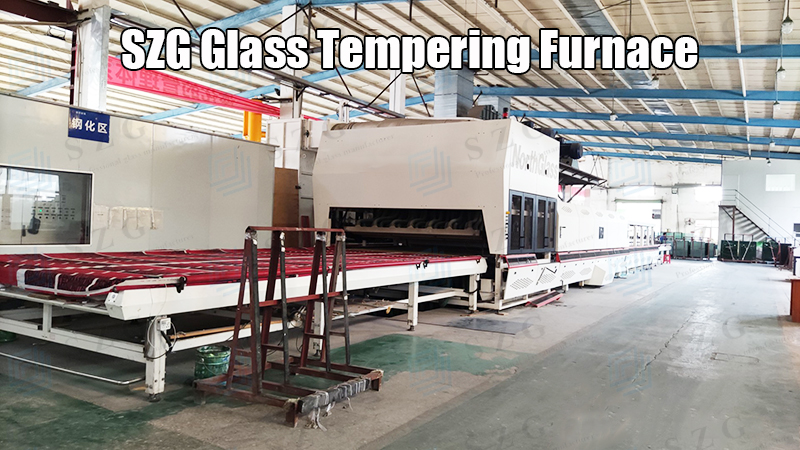
SZG Tempered Glass Processing
Cut the float glass into the desired shape first.
Before the tempering process begins, the glass must be cut, shaped, and finish edge work. If etch or edge a piece of glass after the heat treatment has been done, the finished product will likely be weaker and more fragile than intended, increasing the likelihood of breakage and product failure.
Inspect the glass for imperfections.
Cracks or bubbles may cause the glass to break during any part of the tempering process; if any flaws are found, the glass cannot be tempered.
Wash the float glass.
This step removes any tiny grains of glass deposited during sanding, as well as any dirt that could interfere with the tempering process.
Heat the glass in a tempering oven.
In order to temper glass correctly, the oven temperature must be more than 600 degrees Celsius (1,112 degrees Fahrenheit).
Quench the glass to cool it.
The heated glass is subjected to seconds of high-pressure blasts of cool air at various angles, a process known as quenching. The rapid cooling causes the outer surfaces of the glass to cool and contract faster than the interior. As the inner layer of the glass cools, it tries to pull back from the outer surfaces, which causes tension. This pressure is what makes the tempered glass so strong.
Tempered Glass Application
Window |
Door |
Partition |
Bathroom |
Balustrade |
Awning |